Environment
and Developmental Dilemmas of Kerala
The advent of man has often been accompanied by
ecological disasters and human tragedies from ancient times.
So, it is no surprise that the migration of people to the
hilly areas of Kerala for agriculture, power development and
tourism development lead to disasters such as landslips.
However, human knowledge of economics and sciences including
ecology has grown tremendously in the modern age that we
should be able to work out solutions to our developmental
dilemmas.
The landslips at Kavalappara in Malappuram and Puthumala near
Kalpetta in Wayanad district and Pettimudi near Munnar in
Idukki district should serve as warnings that preventive and
mitigative measures are urgently needed. More than 125 persons
had died in these disasters.
 It is notable that the above
mentioned disasters were associated with plantations. The
landslide at Kavalappara had originated from the 350-metre
high Muthappan hill. Two streams originating from the hill had
been blocked almost completely by land development activities.
Digging of the land for planting compounded the situation
leading to trapping of water on the hills. This led to
weakening of the bond between the clayey soil and rocks,
according to scientists from National Centre for Earth Science
Studies and Centre for Water Resources Development and
Management.
It is notable that the above
mentioned disasters were associated with plantations. The
landslide at Kavalappara had originated from the 350-metre
high Muthappan hill. Two streams originating from the hill had
been blocked almost completely by land development activities.
Digging of the land for planting compounded the situation
leading to trapping of water on the hills. This led to
weakening of the bond between the clayey soil and rocks,
according to scientists from National Centre for Earth Science
Studies and Centre for Water Resources Development and
Management.
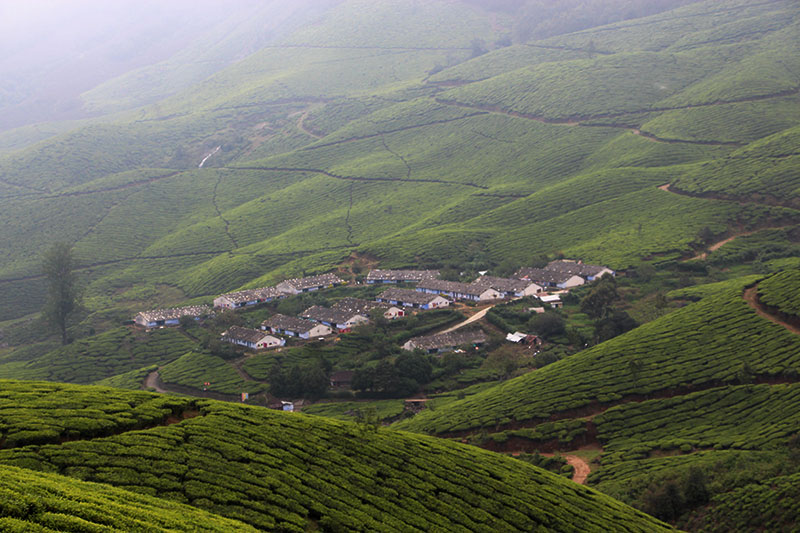
The other two landslips occurred in tea plantations. There
also the bonding between the soil and underlying rocks have
been weakened upon years of exposure to rain and sunlight.
The Amrita Vishwa Vidyapeetham, Kollam, had reportedly
provided two early warnings to the Kerala Government and
Idukki District officials through its Landslide Early Warning
System about possible landslides in the Munnar area including
Anthoniar colony at Pettimudi. However, these warnings were
apparently ignored. In fact, many landslip prone areas of
Idukki district had been identified by the Department of
Geology of Kerala University and the Centre for Earth Science
Studies decades ago. It is time that we increased surveillance
and heeded the warnings.
Tea plantations were a colonial enterprise that had never been
practiced in the hilly areas of the State before. The
plantations were raised mostly on high elevation forests and
shola grasslands after cutting and burning the specialised
flora growing on those areas. This had significantly hit
the sensitive ecology of these areas. This was followed
by growing of eucalyptus on large scale on the hill-sides for
fuel and timber not only by the estates but also by government
agencies. Kerala Forest Department had formed a separate
grassland afforestation division for planting eucalyptus in
Munnar and surrounding areas after formation of the State.
Some areas were planted with black wattle and pine for
industrial use. Besides, some private parties encroached upon
government land and planted eucalyptus.
The shola grasslands of Munnar had a relatively stable
topographical structure compared to other high range areas.
However, decades of plantation activities and construction of
roads and other structures are weakening them, leading to land
slips. In the last few decades, resorts have come up even on
steep slopes. The government is failing to enforce various
laws in the region such as Land Conservancy Act, 1957, Kerala
Land Assignment Act, 1960, and Survey and Boundaries Act,
1961, not to speak of protecting the ecology of the high
ranges and enforcement of laws such as Forest Conservation
Act, 1980, and Wildlife Protection Act, 1972.
Now, a move is afoot to allot land in Munnar and elsewhere to
retiring estate workers. Some land has already been allotted
in this regard. The justification being offered for this
policy is that the workers are left with no place to live once
they retire as plantation workers and leave the estate lanes
(layams). However, it is the responsibility of the estate
owners and trade unions to ensure that the workers will have
provident fund and retirement benefits, enough to meet
purchase of new homes and requirements of old age. In fact,
the biggest tea company in Munnar is supposed to be owned by
workers. The government should enforce necessary laws to
ensure financial security of the retiring workers instead of
distributing sensitive government land to them.
In fact, the estates are showing signs of turning into
ecological disasters. Settlement of people, introduction of
new crops and alteration of the landscape should be prevented
if more tragedies like that at Pettimudi and Puthumala are to
be avoided. In fact, time is running out for several estates,
both economically and ecologically. A few estates have already
been abandoned, marking a drop of nearly 4000 hectares under
tea since the sixties. It is time that the government
considered takeover of defunct estates like the one at
Bonaccord in Thiruvananthapuram district that lies in a
critical high-elevation area. These should then be allowed to
revert back to forests. (Vegetation cover and prevention
of soil erosion at Bonaccord is crucial to water supply to
Thiruvananthapuram city.)
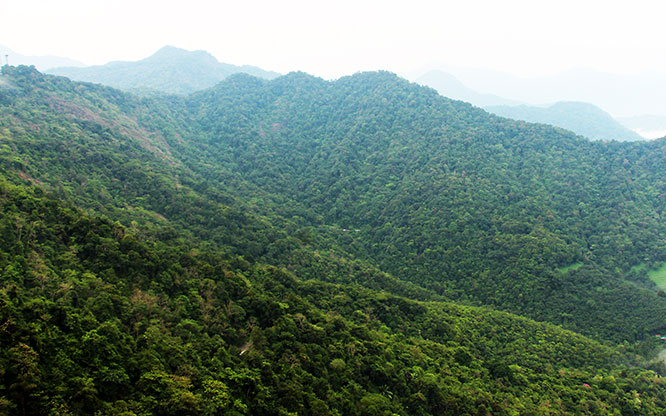 Settlement
of people over a long period in Wayanad district and change in
cultivation patterns are causing even a change in local
climate in some areas of the district. Agriculture of the type
being practiced now may become unviable in the long run.
Wayanad is now boosting its economy through tourism and other
means. However, there is the danger of tourism activities
exceeding the carrying capacity of the district though the
situation is not as bad as in Munnar.
Settlement
of people over a long period in Wayanad district and change in
cultivation patterns are causing even a change in local
climate in some areas of the district. Agriculture of the type
being practiced now may become unviable in the long run.
Wayanad is now boosting its economy through tourism and other
means. However, there is the danger of tourism activities
exceeding the carrying capacity of the district though the
situation is not as bad as in Munnar.
The settled hilly areas of Malappuram district is plagued by
various human activities that gravely affect the balance of
nature. The major among them are operation of large
quarries and construction activities that change the
landscape. Even entire hills are being erased from the
landscape through quarrying, and this is not confined to the
district.
Environmental organisations have been alleging that the
on-going construction of breakwaters for the Vizhinjam port
necessitated large scale quarrying. It was also causing sea
erosion. However, the facts are slightly at variance with
these claims. Though the port would require a large amount of
rock, much of the quarrying in the State is taking place for
construction of sea walls and buildings including palatial
homes.
Of Kerala’s coastline of about 590 km, about 450 km is
protected by seawalls, groynes or breakwaters. Out of
this, about 350 km of sea walls were built during the last
four decades at a very high cost, leaving very little of the
beach. “There are very few natural, stable beaches left while
there are 50 breakwaters and around 220 groynes,” Sheela Nair,
scientist at the National Centre for Earth Science Studies,
told a workshop organised by the Cochin University of Science
and Technology last year. The massive works have often been a
failure, scientists say.
It is a generally accepted fact that construction of seawalls
and breakwaters at one place causes sea erosion elsewhere. So,
the sea erosion at Sanghumughom and other areas of
Thiruvananthapuram coast is not necessarily on account of
construction of Vizhinjam port. Sanghumughom falls in a gap
between sea walls on the coast and erosion have occurred there
even before the construction of the port started.
This kind of dichotomy between facts and positions of
environmentalists is seen in the discourse on environment
these days. Some of their positions may not augur well for the
development of the State. Checks and balances are needed
for quarrying and sand mining. At the same time, it is equally
important to stop extravagant and unnecessary use of rocks,
metal and sand.
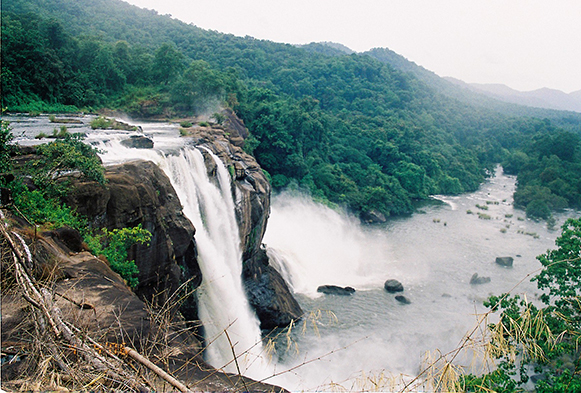
The power and transport sectors often attracted considerable
debate over environment versus development. While opposition
to dam at Silent Valley and Pooyankutty have become generally
acceptable, the debate over Athirappally is still raging. It
has always been the argument that Kerala should go for smaller
projects instead of large hydroelectric projects. Hence, a
run-of-the river project at Athirappally should have attracted
less opposition, especially if appropriate mitigative measures
are taken.
 If
we want the luxury of abandoning Athirappally, people should
go for roof-top solar power which is increasingly becoming a
viable option. (Scope for solar and wind farms is limited in
Kerala.) Solar is renewable source like hydel but has much
lesser impact on environment.
If
we want the luxury of abandoning Athirappally, people should
go for roof-top solar power which is increasingly becoming a
viable option. (Scope for solar and wind farms is limited in
Kerala.) Solar is renewable source like hydel but has much
lesser impact on environment.
Highway projects in Kerala have become controversial more over
land acquisition than environmental concerns. As mentioned
earlier, roads destabilised slopes of hills. In the plains,
road development was often accompanied by filling up of paddy
fields and wet lands and even blocking of water courses.
However, paddy fields lost to roads is only a fraction of
overall loss of wet lands and backwaters over the past half a
century. (Area under paddy has declined from 8.75 lakh
hectares in 1970-71 to less than 2 lakh hectares). In fact,
reclamation of wetlands and backwaters was one of the reasons
for flooding in the State. Yet, the State is still not very
strict about stopping such processes.
When an express highway was proposed along the length of
Kerala, it attracted strong opposition from environmentalists
and the project had to be abandoned. It was even argued that
the highway would split Kerala’s landscape into two though
such things are unheard of from any other country. Now,
similar criticism is emerging about the semi high speed
railway corridor. However, high speed trains had been
operating successfully in several countries. The proposal has
a unique advantage that it would be running on solar power.
Kerala will need a fast transport system if it is to develop
modern industries and find employment to educated youth in the
State.
It is generally accepted that chemical industries are not
suitable for Kerala and titanium industries has been a cause
of pollution and sea erosion in the State. However, Kerala
cannot forgo them because of their specific advantages and
need for mining and value addition of mineral sands. Hence,
the solution is to take mitigative measures such as treatment
of the pollutants, prevention of leaks from the factories and
refilling of mined areas and growing of causarina trees and
mangrove species to prevent erosion.
The tourism industry too is problematic for Kerala. Minimising
impact of tourism on environment is required for the sustained
operation of the tourism projects themselves. The State has
already seen how natural calamities affect tourism.
In fact, Kerala needs to make wise choices on the environment
front while keeping its development needs in mind. The
dependence of the State’s economy on remittances from abroad
needs to be ended by creating employment within the State.
However, protection of environment is the key to prosperity
and happiness.
https://expert-eyes.org
(This article by Roy Mathew first appeared in the
book published by Kerala Legislature Secretariat highlighting the
working of Legislature Committee on Environment (Parithashithi
Samithi- Sabhalam Sargathmakam, 2021).